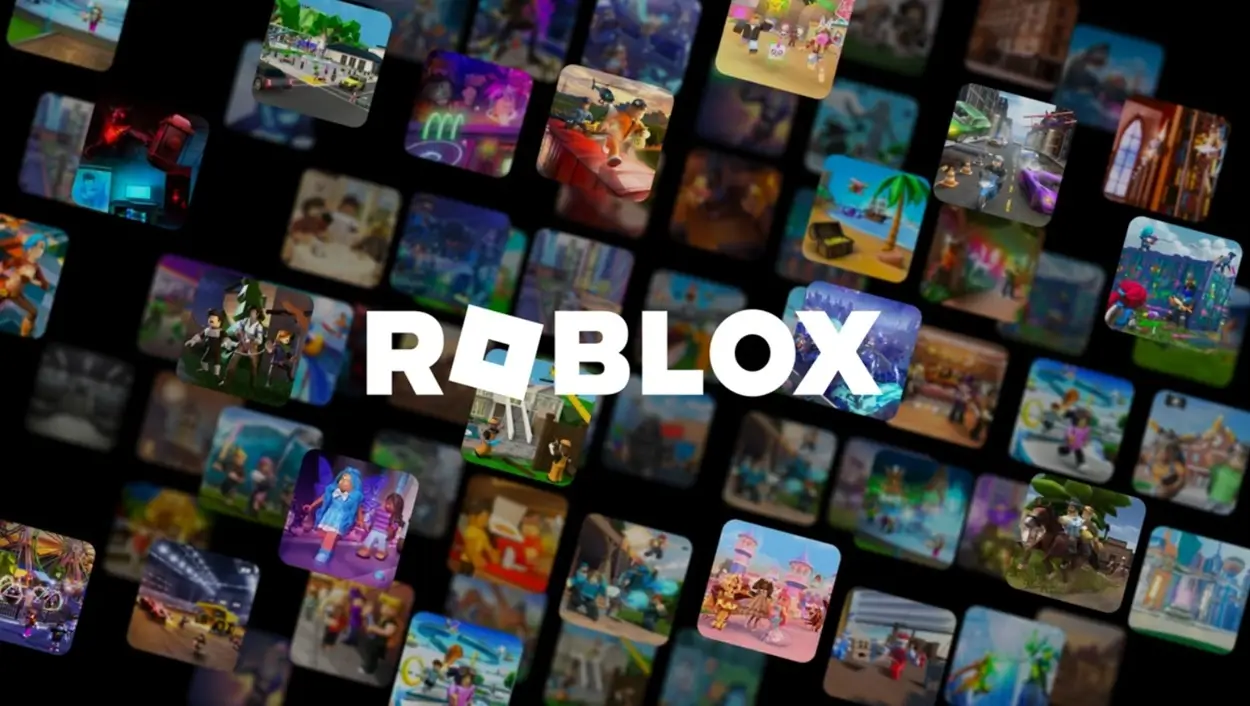
If you have spent any time in the gaming world recently, you have almost certainly come across Roblox. It is one of the most talked-about platforms in online gaming today, and for good reason. Roblox is not just a single game. It is an entire universe of player-created experiences, a game development engine, a social platform, and a virtual economy all rolled into one. We have spent a lot of time on Roblox, exploring its many layers, and in this page, we want to break down everything you need to know about what Roblox actually is, how it works, where it came from, and why it continues to grow at a pace that surprises even its own creators.
The Origins of Roblox
Roblox did not appear out of nowhere. Its roots go back to 2003, when two engineers named David Baszucki and Erik Cassel began working on an experimental physics simulation tool. The early prototype went through several names, including GoBlocks and DynaBlocks, before the team settled on the name Roblox in January 2004. The name itself is a blend of the words “robots” and “blocks,” which gives you a good sense of the visual style the platform was built around.
After a beta phase in 2005, Roblox officially launched to the public on September 1, 2006. At that point, it was a relatively simple platform. Players could build basic structures using block-based tools, create simple games using Lua scripting, and explore worlds made by other users. The early community was small but passionate, and the foundation those early years laid made everything that followed possible.
Tragically, Erik Cassel passed away in 2013 after battling cancer. His contribution to Roblox is remembered deeply within the community, and every year players hold in-game tribute events in his memory. David Baszucki continued as CEO and has led the platform through its most explosive growth periods.
Growth was steady through the early 2010s, but things really accelerated from around 2016 onward. The COVID-19 pandemic in 2020 pushed that growth even further, as millions of people around the world turned to online platforms for entertainment, socializing, and creative outlet. By 2025, Roblox had crossed 144 million daily active users, with over 200 million people logging on every month.
What Exactly Is Roblox?
The most common misconception about Roblox is that it is a single game. It is not. Roblox is a platform, and that distinction matters enormously. Think of it less like a video game and more like an app store for games, except that almost everything on it was made by regular users rather than professional studios.
When you open Roblox, you are not dropped into a fixed game world with a set story. Instead, you are presented with a massive library of experiences. These experiences span every genre imaginable. There are obstacle courses called obbys, role-playing worlds like Brookhaven, simulator games like Pet Simulator, survival games, horror experiences, racing games, fighting games, tycoon games, and even educational experiences. If you can imagine a game concept, there is a good chance someone has already built it on Roblox.
Every single one of these experiences was built by a user or a team of users using Roblox Studio, the platform’s free game development tool. That is what makes Roblox genuinely unique. It is not just a place to play games. It is a place where anyone, regardless of professional experience, can build and publish their own games for the world to play.
How Roblox Studio Works
Roblox Studio is the beating heart of the platform. It is a free, downloadable game development environment that lets users build 3D worlds, design gameplay mechanics, write scripts, add physics, and publish finished experiences directly to the Roblox platform. We have used it ourselves, and what strikes you immediately is how accessible it is compared to professional game engines like Unity or Unreal Engine.
The scripting language used in Roblox Studio is Luau, a modified version of the Lua programming language. Lua was chosen because it is relatively beginner-friendly while still being powerful enough to support complex game logic. Many of the developers who have grown up building on Roblox have used it as a launchpad into professional game development careers, with Luau giving them a genuine foundation in programming concepts.
Roblox Studio includes a wide range of built-in tools. Here is a quick look at what creators have access to:
- Terrain Editor — sculpt landscapes including hills, water, caves, and custom biomes directly inside the editor.
- Part and Mesh Tools — build structures and objects using geometric parts or import custom 3D meshes.
- Script Editor — write Luau scripts to control game behavior, UI, physics interactions, and player mechanics.
- Physics Engine — apply realistic gravity, collisions, and forces to objects within your experience.
- Animation Editor — create custom character animations and rig models for movement.
- Plugin Support — install community-made plugins from the Creator Store to extend Studio’s functionality.
- Playtest Mode — instantly test your experience inside Studio before publishing it live.
The Creator Store, which is separate from the player Marketplace, allows developers to share and access free assets including models, scripts, audio files, and decals. This ecosystem of shared resources makes it significantly easier for beginners to get started without having to build everything from scratch.
The Avatar System and Player Identity
One of the first things you do when you join Roblox is customize your avatar. Your avatar is your visual identity across the entire platform. It follows you from game to game, and how it looks is entirely up to you. In the early days of Roblox, avatars were simple blocky characters with limited customization options. Today, the system is remarkably detailed.
The platform uses two main avatar rigs. The classic R6 rig is the original six-part block character that long-time players will recognize immediately. The R15 rig is the newer, more articulated model with fifteen moveable parts, which allows for more realistic and expressive animations. Most modern Roblox games use R15 or the even newer Rthro body type, which brings more human-like proportions into the platform.
Avatar customization goes well beyond body shape. Players can equip clothing items, accessories, hairstyles, faces, animations, and even special effects called emotes. The Avatar Shop, which is accessible from the main Roblox website and app, contains tens of thousands of items. Some are free. Many are priced in Robux, the platform’s virtual currency. Some of the most coveted items are limited edition releases that can only be obtained during specific events or purchased from other players in the secondary market at prices that sometimes reach thousands of Robux.
A notable development in recent years is the introduction of layered clothing, which allows clothing items to stack realistically on top of each other, similar to how clothes work in real life. You can wear a t-shirt under a jacket, for example, with each layer visible independently. This was a significant technical achievement for the platform and dramatically expanded avatar expression possibilities.
Robux: The Virtual Economy
Robux is the virtual currency that powers everything on Roblox. It was introduced in 2007, replacing an earlier currency system called ROBLOX Points. Today, Robux is the foundation of a surprisingly complex and active economy that involves players, creators, and the platform itself.
Players purchase Robux using real money. The exchange rates vary depending on the purchase package, but the general principle is straightforward. Once you have Robux, you can spend them on avatar items in the Marketplace, on game passes inside specific experiences, on developer products within games, or on subscriptions to individual Roblox games that offer premium access tiers.
What makes the Robux economy particularly interesting is that it flows in both directions. Players spend Robux, but creators also earn Robux. Every time a player spends Robux inside a developer’s game, a portion of that goes to the developer. Creators who sell items on the Marketplace also earn Robux from each sale. This creates a genuine circular economy where engaged players can become creators and earn real income from their work on the platform.
The mechanism that makes this possible is called the Developer Exchange program, commonly referred to as DevEx. Through DevEx, creators who have met certain thresholds in terms of Robux earned and account standing can convert their Robux into real-world currency, paid out in US dollars. In Q1 of 2025 alone, creators collectively earned $281.6 million through the DevEx program. That is a staggering number that underscores just how substantial the Roblox creator economy has become.
Roblox Premium is a monthly subscription service that enhances the experience for both players and creators. Premium subscribers receive a monthly Robux stipend, access to the item trading system, a badge on their profile, and discounts on certain purchases. For active players who spend Robux regularly, the monthly stipend often makes the subscription financially worthwhile.
The Social Layer: Community and Connection
Roblox is fundamentally a social platform. While the games are the obvious draw, a significant portion of what keeps people coming back is the social infrastructure that surrounds them. We have seen friendships form, communities build, and events unfold on Roblox in ways that mirror how people interact on mainstream social media.
Players can add friends, join groups, participate in community forums, and create or join private servers to play with specific people. Groups on Roblox function similarly to clans or guilds in other games, with their own hierarchies, roles, and often their own group stores where members can purchase exclusive group-branded items.
Within games, players can communicate through text chat, and on some experiences, verified users aged 13 and over can use spatial voice chat, which lets you hear and speak to nearby players using your microphone. Voice chat has been available in Roblox since 2021 and has become a popular feature in social and role-playing experiences.
Roblox also hosts large-scale virtual events that bring the community together in ways that feel genuinely exciting. We have participated in in-game concerts, watched virtual movie screenings, and joined developer-hosted game launches that drew millions of concurrent players. In 2025, Roblox recorded 45 million concurrent users on a single Saturday morning, a platform-wide record that speaks to just how live and active this community is.
What Devices Can You Play Roblox On?
One of Roblox’s biggest advantages is its cross-platform availability. You do not need an expensive gaming PC or a dedicated console to play. Roblox runs on a wide range of devices, which has been a major factor in its global reach.
Here is a breakdown of where you can play Roblox:
- Windows PC — download the Roblox app from roblox.com or the Microsoft Store. Runs smoothly even on mid-range hardware.
- Mac — available via roblox.com. Supports macOS and runs well on both Intel and Apple Silicon machines.
- iOS — available on the App Store for iPhone and iPad. One of the most popular ways to play, particularly among younger users.
- Android — available on the Google Play Store. Works on a wide range of Android devices, including budget phones.
- Xbox One and Xbox Series X/S — Roblox is available on Xbox consoles, with full controller support integrated.
- Meta Quest — Roblox has VR support for Meta Quest headsets, allowing you to play certain experiences in virtual reality.
- PlayStation — Roblox expanded to PlayStation consoles, broadening its console footprint significantly.
- Chromebook — accessible via the Android app on supported Chromebook devices.
The game also supports cross-platform play, meaning a player on iOS can play alongside someone on Xbox or PC in the same game session without any issues. This seamless cross-play experience is something we genuinely appreciate, because it means you are never separated from your friends just because you are on a different device.
Safety on Roblox: What Parents and Players Need to Know
Given that a significant portion of Roblox’s user base is under 16, safety is a topic the platform takes extremely seriously. It is also one of the areas where Roblox has faced the most scrutiny over the years, which has pushed the company to invest heavily in safety infrastructure.
Roblox has an automated content moderation system that scans text chat, images uploaded to the platform, and audio files for policy violations. Human moderators also review flagged content and handle appeals. The system is not perfect, and the sheer volume of content created every day makes moderation an ongoing challenge. But the investment in safety systems is genuine and has improved substantially over time.
For players under 13, the platform applies automatic protections that do not require any parent action to activate. These include filtered chat that prevents sharing of personal information, restrictions on direct messaging outside of games, and limits on which experiences can be accessed. In 2025, Roblox rolled out over 100 safety initiatives, including age estimation tools and improved moderation filters.
For parents, Roblox offers a dedicated parental controls system that can be managed remotely without needing access to the child’s device. Key features of the parental controls include:
- Screen time limits — set a daily cap on how long your child can play.
- Spending controls — require a PIN before any Robux purchase can go through.
- Communication restrictions — control who your child can chat with, limiting it to friends only or disabling chat entirely.
- Content maturity filters — restrict access to experiences above a certain maturity rating.
- Friends list visibility — see exactly who your child has added as a friend on the platform.
- Experience blocking — block specific games or experiences from being accessible on your child’s account.
- Usage dashboard — monitor daily screen time and activity patterns from the parent account.
These controls give parents a genuinely useful set of tools, though no platform-level control is a substitute for open conversations with your child about online safety. We always recommend combining the built-in parental controls with regular check-ins about what your child is experiencing online.
The Scale of Roblox: Numbers That Put It in Perspective
Sometimes the easiest way to understand what Roblox is comes from looking at the raw numbers. They are genuinely staggering, and they tell a story that no amount of description can fully capture.
As of late 2025, Roblox had over 144 million daily active users, with 56 percent of them under the age of 16. The average user on the platform spent approximately 2.8 hours per day on Roblox in Q3 of 2025. To put that engagement figure in context, that is more time than most people spend watching television in a day. There are over 40 million experiences available on the platform, and new ones are being published every single day.
In July 2025, a single Roblox game called Grow a Garden set a Guinness World Record for the most concurrent players in a video game, with 21.6 million users playing it simultaneously. That record was set on a platform where dozens of other games were also running with millions of concurrent players each. The infrastructure required to support that level of simultaneous activity is immense, and Roblox’s engineering team has invested heavily in making sure the platform can handle it without widespread outages or lag.
From a financial perspective, Roblox Corporation reported $2.8 billion in revenue in 2023, and growth has continued steadily since then. The platform is listed on the New York Stock Exchange under the ticker symbol RBLX and has attracted significant institutional investment on the back of its strong user growth metrics.
Roblox as a Career Platform
One of the most remarkable things about Roblox is that it has quietly become a legitimate career launching pad for thousands of people. The DevEx program has created a new category of professional that did not really exist a decade ago: the full-time Roblox developer.
Some of the most successful games on the platform are developed and maintained by small studios that employ multiple people full-time. Games like Adopt Me!, which regularly draws millions of players, generate enough Robux revenue to sustain entire development teams. The developers behind these experiences are effectively running small game development companies, except that their entire distribution and infrastructure is provided by Roblox.
Beyond full-time developers, Roblox has also created careers in adjacent areas. Avatar item designers sell clothing and accessories through the Marketplace. Scripters offer their services to game studios that need programming help. YouTubers and content creators build audiences around Roblox content. Voice actors record audio for games that use custom dialogue. The ecosystem around Roblox has grown into something that generates real economic activity at scale.
For younger users, the platform serves as an introduction to game development, programming, 3D design, and business concepts. Many professional developers working at major game studios today cite Roblox as the place where they first learned to code. That pipeline from curious beginner to professional developer is something Roblox actively encourages through its education initiatives and creator support programs.
How Roblox Compares to Other Platforms
It is natural to want to compare Roblox to other gaming platforms, but the honest answer is that very few platforms occupy the same space. Minecraft is perhaps the closest comparison, since it also centers around user-created worlds and has a massive community of young players. But Minecraft’s creative tools are fundamentally different from Roblox Studio, and the social and economic layers of Roblox go far deeper.
Steam is a game distribution platform, but the games on Steam are primarily made by professional studios and indie developers with significant resources. Roblox’s creator base is far more democratized, with teenagers making games that compete directly with creations from experienced adults who have been developing for years.
Fortnite Creative and UEFN (Unreal Editor for Fortnite) are perhaps the most direct competitors in the user-generated-content space, but Roblox has a significant head start in terms of community size, creator ecosystem maturity, and the depth of its game library.
What sets Roblox apart, ultimately, is the combination of accessibility, scale, and economy. It is easier to get started creating on Roblox than on almost any other platform. The audience you can reach is enormous. And the ability to earn real money from your creations, even as a teenager, is genuinely unique in the gaming world.
The Future of Roblox
Roblox has made no secret of its long-term ambitions. The company talks openly about building a persistent, interconnected virtual world where people can work, play, create, socialize, and attend events, all within a single platform ecosystem. Steps toward that vision are already visible in what we see on the platform today.
The expansion into VR through Meta Quest support brings Roblox closer to a fully immersive experience. The introduction of spatial voice chat adds a layer of presence that text chat simply cannot replicate. The growing sophistication of avatar customization, including layered clothing and expressive animations, makes digital identity on Roblox feel more personal and meaningful than it ever has before.
Roblox is also investing heavily in AI tools for creators. The goal is to lower the barrier to game creation even further, allowing people with ideas but limited technical skills to build more ambitious experiences with AI assistance handling some of the heavier scripting and asset creation tasks. This is an area we are watching closely, because it has the potential to dramatically expand the range of creators who can build on the platform.
On the safety front, the company has committed to ongoing investment in moderation technology and parental tools. The introduction of age-based account tiers in 2026, including a dedicated Roblox Kids mode for the youngest users, signals that the platform is serious about building an environment that parents and regulators can trust.
Getting Started on Roblox
If you have read this far and you are curious about jumping in, getting started on Roblox is genuinely straightforward. Here is how we would recommend approaching it as someone new to the platform:
- Create a free account — head to roblox.com and sign up. You will need an email address and a date of birth. The platform is completely free to join and free to play.
- Download the app — Roblox requires its own client on PC and Mac. On mobile, download it from the App Store or Google Play. On Xbox, find it directly in the Xbox Store.
- Customize your avatar — before jumping into games, spend a few minutes in the Avatar section. There are plenty of free items to get you started without spending any Robux.
- Explore the game library — the homepage surfaces trending and recommended experiences. Try a few different genres to get a feel for the enormous range available.
- Find friends and communities — the social side of Roblox makes it far more enjoyable. Most popular games have active Discord communities where you can meet other players and find groups to team up with.
- Try Roblox Studio — if you are curious about creation, download Roblox Studio for free and work through some of the beginner tutorials. You do not need to know how to code to start experimenting.
There is no right or wrong way to experience Roblox. Some people come purely for the games and never touch the creation tools. Others come specifically to build and rarely spend time playing. Most people find themselves doing a bit of both, which is exactly what the platform was designed to encourage from the very beginning.
Conclusion
Roblox is far more than a game. It is a platform that has redefined what user-generated content can look like at scale, created real economic opportunities for creators of all ages, and built one of the most engaged and active online communities in the world. From its origins as a small physics simulation experiment in 2003 to a platform with over 144 million daily active users in 2025, Roblox has grown in ways that even its founders could not have anticipated. Whether you are here as a player, a creator, a parent trying to understand where your child spends their time, or simply someone curious about where online gaming is heading, Roblox is a platform worth understanding deeply. We are committed to covering everything about Roblox here on Blox Insider, and this page is just the starting point.